What’s Next? with Clarien
Episode 1: Leadership, Trust and the Human Side of Banking
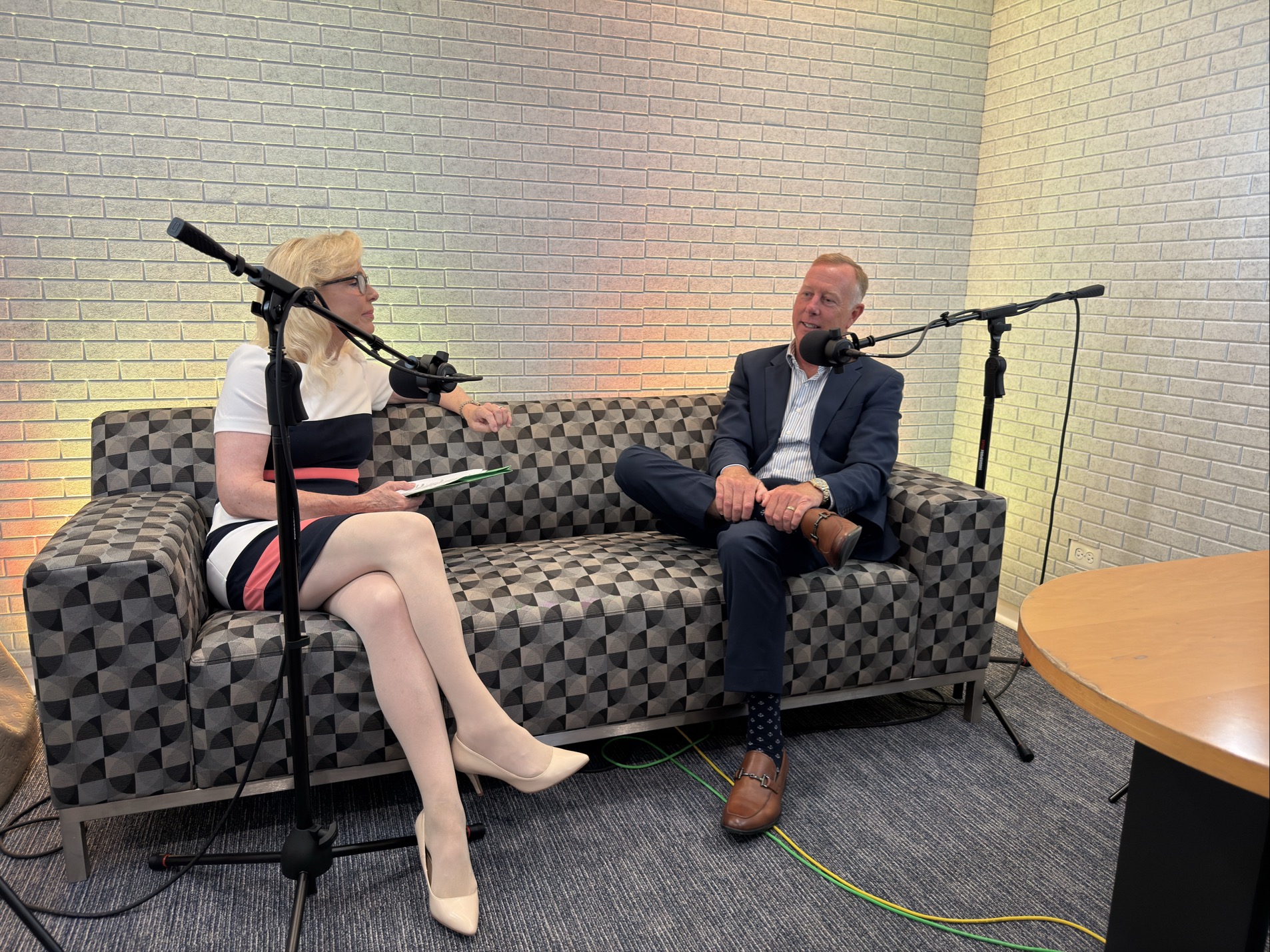
Host: Dianne Brewer | Guest: Ian Truran, Chief Executive Officer, Clarien Bank
Transcript note: The following transcript has been lightly edited for readability and clarity. Minor corrections have been made to punctuation, formatting and obvious transcription errors. The audio recording remains the definitive version of the conversation.
Introduction
Dianne Brewer
Ian, welcome to What’s Next? with Clarien: conversations about money, life, business and the future here in Bermuda. This series is about more than banking. It is about the decisions that shape our lives, our families and our communities. Today, we are joined by Ian Truran, CEO of Clarien Bank, for a conversation about leadership, financial wellbeing, Bermuda’s future, and why trust and relationships still matter in a rapidly changing world. Powered by Bermuda Broadcasting Company, celebrating Bermuda’s local voices. It is always interesting for the community to get to know a CEO. It is not often that we are given the chance to do so, and we know that you are extremely busy. It would be helpful to start with a little bit about your background and how you chose to get into finance and banking.
Ian Truran
Thank you very much for the opportunity, Dianne. I appreciate the opportunity to meet with the CEO, but at this stage let’s just have an opportunity to meet with Ian first and foremost. A citizen in Bermuda who loves his country, who loves his family and who loves the community he works with. So, how did I end up here? It certainly was not the charted path when I graduated from university. I studied business, but came back to Bermuda with a pretty open mind about where I was going to go. Insurance and reinsurance were not then what they are today. If you were going into business, you were going into accounting, banking, trust, advisory, asset management, those types of industries.
Ian’s route into banking
Ian Truran
I had the privilege of meeting with the CEO of one of the banks back then, and his first question was, ‘So, where do you want to be?’ I said, ‘One day I want to sit in your chair,’ which was probably a bit of an arrogant response. I did not intend it to be arrogant at the time. It was probably more that I was nervous and trying to figure out my way, but it helped steer the conversation and, directionally, where I ended up.
Ian Truran
I started with Butterfield in 1992 and have never looked back. It has happened way too quickly when I think about more than 30 years in banking. I had the opportunity to start at the foundational layers. They did not have an official management trainee programme back then, but I did have the opportunity to work my way around the bank and feel my way into the areas where clients had most impact. That was from teller services to treasury, lending and asset management. Ultimately, I found my way into lending.
Ian Truran
One of the stories I tell is that I went away and studied business, four years of strenuous studies, graduated, came back to Bermuda, and at the time I was doing loans for Rainbow vacuums. Nowadays people might say, ‘What is a Rainbow?’
Dianne Brewer
I had one.
Ian Truran
They were quite expensive. It was the fad of the day. People really wanted a Rainbow vacuum, and I think they were about $1,800, so I was doing consumer loans for $1,800. I ultimately worked through consumer credit, retail mortgage financing, commercial and corporate, and also did some private banking along the way. Then I had the opportunity to make a change.
Ian Truran
In 2001 I moved to what was Capital G at the time. It was not yet licensed as a bank, but it was about to be licensed. I had opportunities to meet with the CEO at the time, as well as the Gibbons family, and got to understand what was important to them. James Gibbons, who was the chairman at the time, made it very clear to me that, as a client of a bank, he had certain expectations of the institution providing him banking services. He felt there was an opportunity for what was Capital G at the time to make an impact, and we certainly did.
Ian Truran
That ethos, that operating model, is still core to how I approach relationships and financial services in Bermuda. At the very core, it is about providing superior products with superior service. If you can deliver that, whether in banking or anything else, clients will react positively to that story.
Trust, responsibility and culture
Dianne Brewer
Yes, absolutely.
Ian Truran
On leadership, I think you hit it perfectly when you said trust and relationships. Whether it is the role of the CEO or anybody working in a financial institution, the way I look at it is this: if somebody has deposited $10 with us, $10,000 with us or $10 million with us, they expect us to manage their money prudently, responsibly and well. That core primary obligation is to the depositor first. Then, when we make decisions about how we manage that money, whether we lend it, invest it or otherwise, we need to do so with risk and return profiles built into it. At the very core, it goes back to the relationship you have with your customer. If you can keep that tenet, it keeps you focused on the North Star, which is client centricity and client first.
Dianne Brewer
Absolutely. Trust is everything. Whether, as you said, they have $10 or a couple of million dollars, that is their money. That is everything to them. Without that trust, there is a problem, and that is an important part of Clarien’s branding.
Ian Truran
Very much so. From a value perspective, I am fortunate to be the CEO, and I do consider it a privilege to have the role that I have. When it comes to establishing the culture in the organisation and the values, I look at the CEO as chief cultural architect. If the CEO does not have that right, it is going to be pretty hard to have the correct culture in the organisation.
Ian Truran
It is also about looking at the values you have. I had this conversation with our group chair and said one thing I am fortunate about is that the values of the organisation are my personal values as well. There is never a challenge between my personal values and the corporate values. They are entirely aligned, whether it is respect, trust, empathy or the characteristics you would expect us to demonstrate from a behavioural perspective. They align directly with who I am as a person, which makes it much easier. I am not challenged about what is right versus wrong.
Dianne Brewer
That is very important. You have answered a lot of these questions already, but was leadership something you always aspired to? And who was that CEO?
Ian Truran
It was Michael Pollett.
Dianne Brewer
I was thinking, because when I first joined, Michael Collier was just on his way out.
Ian Truran
And he still keeps his finger on the pulse whenever he sees me, making sure I am still doing a good job.
Bermuda, relationships and knowing your customer
Dianne Brewer
What makes Bermuda unique from both a banking and community perspective? Obviously, there are some very unique characteristics of our island and unique ways that we approach clients, lending and the various products you offer.
Ian Truran
Throughout my career, one of the most difficult but also beneficial things is what we often refer to nowadays as KYC, know your customer, as in passports, driver’s licences and those sorts of things. The way I have always approached it is that you know your customer not through a piece of paper, but through the relationship you have with them.
Ian Truran
That can be fantastic. We are in Bermuda, a community of around 60,000 people, but it can also be a challenge because you may have personal connections with family members, friends or otherwise. It is about making sure that integrity prevails throughout. Often, the way I have approached it is that I never see the name of the customer when I am making a decision. I make the decision around the decision, and might find out the customer’s name later on.
Ian Truran
That is both a benefit and a challenge on the island. Sometimes people do not want you to know how much money they may or may not have. What I have found is that when you have the opportunity to interact with the customer and truly understand their needs, Bermuda is slightly unique. We are less around the product, and certainly this would be true for Clarien, and far more around the solution we are trying to create for the customer.
Ian Truran
Whether through our branding or how we interact with customers, we do not get it right all the time, and I acknowledge that. But we will often try to say, ‘What are you trying to achieve?’ We are not trying to sell you a mortgage or a bike loan. What do you need? If you need a car to get to work and take your kids to school, then let’s help with a solution associated with that. Or, if we are talking about home renovations, perhaps the real objective is not just to install new windows. Perhaps it is to create more equity in your home as part of a retirement plan for the future. Then let’s talk about that and how we can work with you, whether through credit, a savings programme or investment programmes.
Ian Truran
So it is far more solution-oriented and less transactional in nature. The shift in financial services, certainly for us, is that while we use technology to facilitate that, it can never get away from the human component. Whether your technology is so good it feels like you are talking to a human, or whether you have the opportunity to step away from the technology and say, ‘I would really like to talk to somebody who can help me through this,’ that human component still matters.
Technology and the human side of banking
Dianne Brewer
That is such a major issue in the US and other places, where you get all these automated services and it is nearly impossible to get through to a human being. That can be extremely frustrating. Now with AI and all the changes going on, that human interaction is so critical.
Ian Truran
It is, and it is something that can never be lost on us. If, candidly, all we become is a technology interface between us and our customers, then I think we have lost the plot. This is a personal business we are in. If I want to conduct a transaction, then yes, I want to be able to do that as efficiently as possible, whenever I want, from wherever I want, and technology should drive that.
Dianne Brewer
Sure.
Ian Truran
If I want basic financial advice, yes, there are technological platforms that can help with that as well. But at all points in time, if I want to speak with somebody, or if we see that a customer may be going off on a path they had not intended, then it is our obligation, responsibility and accountability to step in and help that customer along their journey.
Ian Truran
Often, the decisions made early are the ones that have a really long-lasting impact, and we want to get that right. Take first-time home ownership. Are you really ready for home ownership? I have conversations with younger generations, or generations getting ready to go down that path. If you are going to have a $2,500 or $3,000 a month mortgage, have you demonstrated that you can save $3,000 a month plus? Once you go into home ownership, there will be additional expenses, whether that is pumps, painting, windows or air conditioners. Can you actually afford that?
Ian Truran
Often people either do not want to hear the answer, or they will say someone else is willing to lend the money, so why would you not? Maybe we have asked the questions slightly differently from someone else, and we understand the risks versus the rewards a little better. Again, that is all about understanding the customer, the journey they are trying to go down, what they are trying to achieve, and where we can design solutions to try to solve that.
Ian Truran
That is the Bermuda phenomenon: close community, and wanting to do right by your community. But the world, and certainly Bermuda, is changing. Whether it is cost of living, social needs or changing economic circumstances, I think financial institutions that have the trust and responsibility of their customers need to change along with that as well.
Ian Truran
Client servicing and expectations are also changing. We all have, and continue to have, a growing requirement for instant gratification. I ask a question and I want the answer I want, and I want it now, even if it might not be the answer I am looking for. But how do we work better with the country as a whole? Whether the government is trying to achieve certain things, or my school is trying to achieve certain things, or my church group is trying to achieve certain things, banks need to be there for all aspects of that. Where does that start? Financial literacy is fundamentally important.
Cost of living, home ownership and lessons from the past
Dianne Brewer
Since you brought it up, financial literacy is on my question list. It is such a critical topic right now. It is an unusual time. Everybody thinks they have grown up in an unusual time, but it really is. There is a lot going on in the world. There is the cost of buying a house, the cost of living, paying your BELCO bill, groceries. A lot of people are really struggling, not even to purchase a house, but just to rent a house, condominium or apartment. What are you seeing? You have been in the industry for a good period of time. How would you compare how you are reacting now to these economic conditions versus 10, 15, 20 or 30 years ago?
Ian Truran
From a complexity perspective, the world is more complex, and Bermuda is no different. We might think Bermuda is another world, but the complexity in Bermuda is significant, as are the interplays. At the macro level, banks, including us, are active in trying to make sure the solutions we offer fit the purpose of Bermuda’s needs right now.
Ian Truran
People might say that requiring 20% down towards home ownership is difficult. I remember what it cost when I bought my first home in the 1990s versus what it costs to buy a first home today. It is significantly different. How does the generation that wants to go into home ownership save sufficiently towards that? Is that fair? Is that equitable? Should it be less?
Ian Truran
What I can recall is the 2010 era, when banks were offering 100% financing, or close to those levels. I think all of us have learned, whether we were in banking or clients at the time, that there are some very hard stories that come out of that level of borrowing. Then 2013 happened in Bermuda, and there was almost a 35% plus reduction in housing values. A million-dollar property was suddenly worth $650,000, or a $500,000 property was worth something far lower. People were underwater and feeling financial pressure to meet their obligations. At that point, does the person stick it out and continue to try, or do they say, ‘I am done. Here are my keys’?
Ian Truran
Those stories are still fresh in people’s minds. We cannot forget that, because there are still people struggling with something that happened more than 10 years ago, but is very real today. I often refer to those as the battle scars of your career. I have been fortunate to have been in it for some time. I have some grey hair and less hair to show for it. It is fantastic when you have the success stories, but you also need to learn from those that were not quite as successful. History can inform the current moment to make sure we do not repeat the same mistakes again.
Ian Truran
Collectively, I think Bermuda is doing its best to address cost-of-living issues, but we are not operating in isolation from the rest of the world. Other places are facing the same circumstances. Whether it is global tariffs, the cost of fuel or the cost of merchandise generally, all of that is going up.
Ian Truran
We have been doing work internally around the inflationary cost of hiring. If there is attrition in your team, or you are trying to attract new talent, the cost of hiring the next person is not insignificant. In the same way that costs affect the community at large, they affect us as a financial institution. How do we manage that? People might say we pass those costs on to customers, but we do our best not to. We try to be as competitive as possible on our deposit products and lending products.
Ian Truran
We also have to accept that a proportion of the bank’s assets are earned overseas. We have money on deposit that we do not lend to somebody, so we have to invest those dollars. How do we get returns that offset the costs? You do not get those returns by making less risky decisions. If you want to maximise returns, you might make a decision that drives the risk profile up. When we manage people’s liquidity, going back to trust and confidence, we need to be very prudent. We can never find ourselves in a position where anybody is challenged to get their money. That drives how you operate, which drives decision-making, the cost base and the reward base. It is all interconnected, which goes back to complexity.
Savings habits and financial planning
Dianne Brewer
I have kids, and that 20% can be a very significant number if they are looking to put down a deposit on a property. What I have been telling them, having been in finance and owning property, is to save. Start saving when you are young. When my kids were born, I set up savings accounts and tried to encourage them from the youngest age to keep putting money aside and think about the future a little earlier than they might want to, because it comes faster than they realise.
Ian Truran
I can remember my grandmother, who worked at Bank of Butterfield many years ago. We used to have passbooks back then, perhaps showing my age a little bit. She was very proud to show me as a young boy. We had a joint account, and I think once a month she put $50 aside and put it in. She would show me my passbook, and over time the balance got a little bigger each month. That savings discipline she instilled, that is what it was. If we can do that with younger generations earlier, the better, if we can afford to do it ourselves for them, but also making sure they take on that discipline as well.
Ian Truran
Like you, I have two boys in their mid-20s, and it is about establishing a budget. What can I afford to spend? What can I not afford to spend? How much money do I need to save for tomorrow, or for a rainy day? If you want to go on vacation next year, or go to the World Cup and watch a football game in four years, it is going to cost you a certain amount. How are you going to set that money aside? Is that the best choice and use of money? You have to live life and love life. I firmly believe that.
Dianne Brewer
That is so valid. My kids’ generation are all about travelling and experiencing life, which is wonderful. It is something I did not really do, and I am a bit jealous. But on the other hand, as you said, all of that money going into trips and experiencing life means you are losing out somewhere else. When you look to buy property, or settle down and have kids, it is definitely a battle for many people I have discussed this with.
Ian Truran
You can take it from the personal to the commercial as well. Whether you are a small business owner, small or medium-sized enterprise, or a larger commercial or corporate organisation, having a working capital plan and money set aside to deal with payroll, payroll tax, social insurance, buying more inventory or renovating your facility, all of those things take planning and making sure you are set up for success.
Ian Truran
There are simple benchmarks we used to think about when lending money or assessing people’s ability to repay, such as having a certain number of months of money set aside. You can take that from a personal perspective all the way up to large multinational corporates. Those rules of thumb say, for example, I need a certain number of months of cash in the bank, or the ability to get to cash if necessary, to meet obligations, pay bills, buy the next round of inventory or make improvements.
Ian Truran
Governments are no different. Governments have the same scenario analysis to perform. They know certain revenues are coming in and need to decide what they can afford to spend on social benefits, infrastructure, education or medical services. It is the same idea, from your child, to the business, to government.
Dianne Brewer
It is a balance and a choice. One way or another, you have to take a path and hopefully end up on the right one. It is important to enjoy life, for sure, but these things come up so fast. From a business perspective and a personal perspective, we are in a world where maybe you needed three months’ emergency savings before, but now you probably need more like six months. It is a more challenging environment.
Fraud awareness and financial literacy
Ian Truran
One of the fundamentals we are talking about is financial literacy, generally speaking, whether at the personal, corporate or institutional level.
Dianne Brewer
Yes.
Ian Truran
What does that mean? Financial literacy is a broad topic. It can mean learning a savings programme, understanding how much money you can borrow versus how much you should inject towards something, or, as you said, changing circumstances. How much cash do I need on hand to survive three months versus six months?
Dianne Brewer
Yes.
Ian Truran
That is one aspect. There is traditional saving and investment management, which can become more complex. Then there is the question of how to make sure you do not get defrauded. Unfortunately, a higher proportion of the community is being targeted. I am not saying whether fraud attempts are successful or unsuccessful, but Bermuda has certainly seen an increase in the number of people being targeted for fraud over the last 24 months.
Dianne Brewer
Scary.
Ian Truran
It is. So, when you think about responsibilities from a banking and community perspective, financial literacy is broader than managing your financial affairs better, savings or investment. It also includes preventing fraud. It encompasses all of those aspects.
Dianne Brewer
For the longest time I did not get many of those calls, but sometimes after large events that put Bermuda in the spotlight, I have had a flurry of different phone calls. What I always tell people around me is to hang up immediately and call the bank directly. Do not answer, do not say anything if you hear something suspicious, or do not even answer the phone if you see a number you do not recognise. If it is the bank’s number that you recognise, still call the bank directly.
Ian Truran
I would go one step further with social media challenges now, whether Facebook, Instagram, TikTok or whatever social channel you prefer. People entice you to click here or purchase something through that channel. I would encourage people to go back to the organisation that is ultimately trying to sell you that product and go through their website as a legitimate source. Do not click through links, because they could be capturing your credit card information, your personal information, or you could be buying something and never receive anything.
Dianne Brewer
With social media, I think younger generations are doing better with being guarded than older generations. There is a bit of a divide there. It is a very unusual time, where you have to always be suspicious, which is not a great way to live, but it is where we are right now.
Ian Truran
Absolutely.
AI, judgement and the future of work
Dianne Brewer
What worries you, but what also excites you, based on what is going on? I do not know if that is too much of a trick question, but it is a good one. You have to balance both: optimism that good things are coming, and also what we were just discussing.
Ian Truran
I had the opportunity to be a guest speaker at one of the graduating classes last week, and you could not have that conversation without talking about AI, especially with the generation I was addressing. On the front page of the Gazette that day, there was a global CEO talking about the number of jobs that would be lost as a result of AI. That is scary and exciting at the same time.
Ian Truran
My advice was that these are going to be the future leaders, certainly we hope, and I do not think technology is ever going to replace leadership. If you are doing a task that a machine can do, then yes, I think your role is potentially at risk. How do you get retrained to avoid being assimilated by a machine?
Ian Truran
It was an interesting conversation. If you think about trades, AI cannot perform a trade for you, whether that is mechanical, construction or those sorts of things. If you are technically trained, have experience and are good at your job, I think you are in a good place.
Ian Truran
If technology can run 24 hours a day, perform analysis based on data 24 hours a day, and, based on good governance, come up with a judgement, I still firmly believe people should always be involved in that decision-making process. Letting AI drive judgement would be a mistake. That is a personal belief. It may change over time, but that is where we find ourselves today.
Ian Truran
I was at a conference in New York, and here is how I positioned it to the audience. If I told you AI was going to manage your mother’s money, how would you feel about that? There were about 100 people in the audience, and only one person put up their hand to say they would be comfortable with that right now. That goes to the point that there are certain things AI cannot do, or can do but where we still need judgement based on training and experience.
Ian Truran
At the same time, going back to instantaneous gratification, if I want a loan and technology can give me an answer instantly, should a financial institution not be trying to deliver a solution like that for its customers? Or if I want to open a new account, or do x, y and z, are there things we do today that have lots of steps and handoffs to different team members, whether in Bermuda or around the world? If technology can help drive that efficiency, it would be crazy for us not to take advantage of that. We want to be more efficient, but equally, if I can serve my customer more quickly, from a client-centric view, then in my mind I am obligated to figure out how to do that.
Ian Truran
But we must do it without eroding trust, making sure we protect people’s privacy and making sure the decisions being made have no bias embedded in them. It is imperative for this generation to figure out how we can take advantage of these tools and make sure they deliver what they are designed to deliver, and do not get into the wrong hands or get used against us.
Dianne Brewer
I have had those conversations as well with younger people in their 20s, maybe just graduating from college, who are asking what they should do because they are hearing that AI will take over. It is early days, and there are still a lot of glitches and things that are not right with AI. It is certainly a threat in some industries, as you mentioned. Anything that requires your hands, any trade, anything that requires a personal touch, I think those will always be safer. But it is difficult to counsel people going through that mindset of what path to take. Back when we were starting out, it was finance, law, accounting, insurance and later reinsurance. I battle with myself as to what to advise based on what is coming.
Ian Truran
You battling with that is exactly where we all are right now, whether from a leadership perspective, the strategy of a financial institution or the strategy for the country. It is here. It is not going to disappear. So how do I make sure I can use it to the best of its capability and my capability? I would take that ownership challenge on all day, and I do in the role I am in. Even as a student studying, one of the pieces of advice I gave was: while doing your academic studies, learn how to use AI for something other than trying to help with your homework.
Ian Truran
Use AI for a project. Pick a passion, whatever your passion may be, and learn how to use AI to help you deliver against that objective. That will be an entirely transferable skill. If you have that transferable skill, I do not think you can simply be replaced. It is a matter of embracing it today, using it for legitimate, credible purposes, and using it for things you are passionate about. Pick something you want to solve for, and learn how to use AI to help you with that. The knowledge base is incredible. Your ability to use it and get the best output is probably where the challenge exists.
Ian Truran
Do not be afraid to test one platform against another platform, because they are not all perfect and they are not all the same. We have had conversations internally where you could say, ‘I am the CEO of a bank. I want agent AI to help me with creating another CEO of the bank. How would that person do what I am supposed to do?’ Imagine having an AI clone that is another part of you. That is scary, but it is the real world and it is happening every day.
Dianne Brewer
I do not think it is something we can necessarily just worry about. As you said, we have to embrace it. We have to look for ways to expand our own abilities and interests. Things will evolve. Worrying too much is not going to be helpful, but I can see the worry and understand it. Like any major change, things tend to work out and evolve.
Ian Truran
Going back to the challenge you described earlier: I want to travel, and I want to balance that against home ownership. Do not be afraid to plug that into AI and see what it says. I am sure it will come up with some financial objectives, such as how much you should be saving each month. Now, again, do not just trust it. Apply common sense to it. With financial literacy, there are lots of tools now that people did not previously have access to. They can get access to that information, but use common sense.
Dianne Brewer
Very eye-opening, as long as they are asking the right questions. Exactly.
Quick-fire questions
Dianne Brewer
I have some fun questions to ask you, just to get to know you a little bit outside of these regular questions. Early bird or night owl?
Ian Truran
Early bird.
Dianne Brewer
Coffee or tea?
Ian Truran
Coffee. Two cups.
Dianne Brewer
Two cups in the morning?
Ian Truran
In the morning.
Dianne Brewer
Best way to disconnect from work?
Ian Truran
Boating and landscaping.
Dianne Brewer
Perfect. We have the most gorgeous waters to do that. There is nothing like being out on those beautiful waters and disconnecting from the planet.
Ian Truran
Last weekend, that whole May 24 weekend was probably, if we could replicate that for the whole year, taking a boat out and sitting in the reefs when it is only blowing three knots, and it is calm, and you can see the fish right below you. It was amazing. So if there is any opportunity to disconnect and do it that way, I strongly encourage it.
Dianne Brewer
One habit that keeps you productive?
Ian Truran
Continuous improvement. Do not get complacent. I know that probably sounds easy to say, but constantly be challenged to ask, ‘How could we do it better?’ or ‘How could I do it better?’
Dianne Brewer
Do not be satisfied with today.
Ian Truran
Because tomorrow is going to be different. You need to be prepared for that.
Dianne Brewer
A place in Bermuda that helps you recharge?
Ian Truran
Out on the water.
Leadership lessons and decision-making
Dianne Brewer
One lesson leadership has taught you?
Ian Truran
Do not be afraid to make mistakes. I have a motto associated with this: fail fast, fail cheap and do not repeat.
Dianne Brewer
I love that, because that is the way it happens.
Ian Truran
If you are willing to make mistakes that are so large they could affect your future, that is probably a little too risky. But operating in a world where you say, ‘I can never make a mistake,’ or you are unwilling to make mistakes, is not realistic. Sometimes you have to make decisions without full information, and there is a probability you will make a mistake along the way. You learn from those. Do not make them so big that you cannot recover from them. Learn from them and do not repeat them.
Dianne Brewer
You do learn from failing, and you appreciate success more. Sometimes parents in certain generations have tried so hard to cushion children from failing, but if they do not learn that life is not always easy, then they do not learn that failure can make them stronger and make them appreciate the wins.
Ian Truran
It goes back to the conversation we were having around complexity. In a perfect world, you have all of the input factors to help you make the right decision.
Dianne Brewer
Right.
Ian Truran
In the real world, that does not exist. Something will change overnight, or something will change while you are making that decision. Somebody might look back with hindsight and ask whether you took something into consideration. Sometimes, yes, I would have had that information been available to me. Sometimes you have to make a decision without all of the correct input factors. That does not mean you do not make a decision. You still have to make a decision at certain points in time, so be willing to take them, and be measured in the risk.
Dianne Brewer
There are no instruction manuals. Every day is a lesson to live, and every life experience makes you stronger. One thing people would be surprised to know about you?
Ian Truran
I am a pretty open book, so I would be surprised if somebody said they did not know something about me. Growing up with the kids, we tried to make sure they had every experience they could. At one point we had tortoises around the house and a goat around the house. Before going to work in the morning, I would be feeding the goat in my suit. People might not otherwise know that I am an animal lover.
Dianne Brewer
That is awesome. It is wonderful to have animals when kids are growing up because it teaches them so much, including empathy.
Ian Truran
Our kids were involved in equestrian sport, as were my wife and I. I was president of the Bermuda Equestrian Federation for quite a number of years. The kids started riding at a very young age, and the degree of responsibility that gives to those kids, and also to the family, because kids do not get there by themselves, is significant. Mums and dads, and thank goodness for Mum in this case, did a fabulous job supporting them. If you can get your kids involved in something like that and be part of it with them, I think it gives purpose to the soul.
Dianne Brewer
If you were not in banking, what would you be doing? Does it involve a boat?
Ian Truran
I would be a marine biologist.
Dianne Brewer
Really?
Ian Truran
Yes. It was one of those things I thought about, but my guidance counsellor gave me advice back in the late 1980s and asked, ‘What are you going to do?’ Unfortunately, I think that probably was not the best advice, because there are lots of opportunities, certainly in Bermuda, to do marine biology. I love the water and have always loved the water. I grew up around Harrington Sound on the weekends and had a little rowboat. There was not much of Harrington Sound I did not know. I would go out first thing in the morning and come in very late, much to my mum and dad’s displeasure. I learned the water, and that would definitely be a passion I could take.
Dianne Brewer
What is the best advice you have ever received?
Ian Truran
I cannot say it is any one thing. It is an accumulation of different sound bites or advice. Be humble. Humility is a great thing. Do not forget where you came from. Know the difference between confidence and arrogance. Do not be arrogant. Be passionate. I think people find it much easier to follow and join somebody when they show passion versus when they are dispassionate about something.
Ian Truran
Be authentic. That probably should have been my first one. I live by that. I try to be who I am. Do not try to be something you are not. You just run out of energy and get confused.
Dianne Brewer
Those are wonderful traits for a CEO to have in mind, because they filter down and create a culture where people feel more comfortable. I think that is why you have good longevity with your staff members.
Ian Truran
We have a fantastic team. Kudos to them.
Closing reflections
Dianne Brewer
That is wonderful, Ian. I have learned so much from this discussion, and it has been wonderful talking to you.
Ian Truran
Thank you for the opportunity.
Dianne Brewer
We are very excited to kick off this series. I think there is so much coming up that we are going to learn from various members of your team, who are going to explain what you do. It is wonderful to be able to get to the source, ask these questions and get direct answers. It is a fantastic way to communicate with listeners.
Ian Truran
I would say exciting times are ahead of us. The people part is going to be even more important than the technology part, because people are what connect us to our customers and help inform the strategy about how we solve those challenges going forward. We all want to work with a good team and people who are aligned to how we think about things and what is important to us. I am excited by the opportunity. Thank you.
Dianne Brewer
Thank you so much for joining us today and for this wonderful conversation. I appreciate it. It has been very eye-opening and very interesting to talk to you.
End of transcript